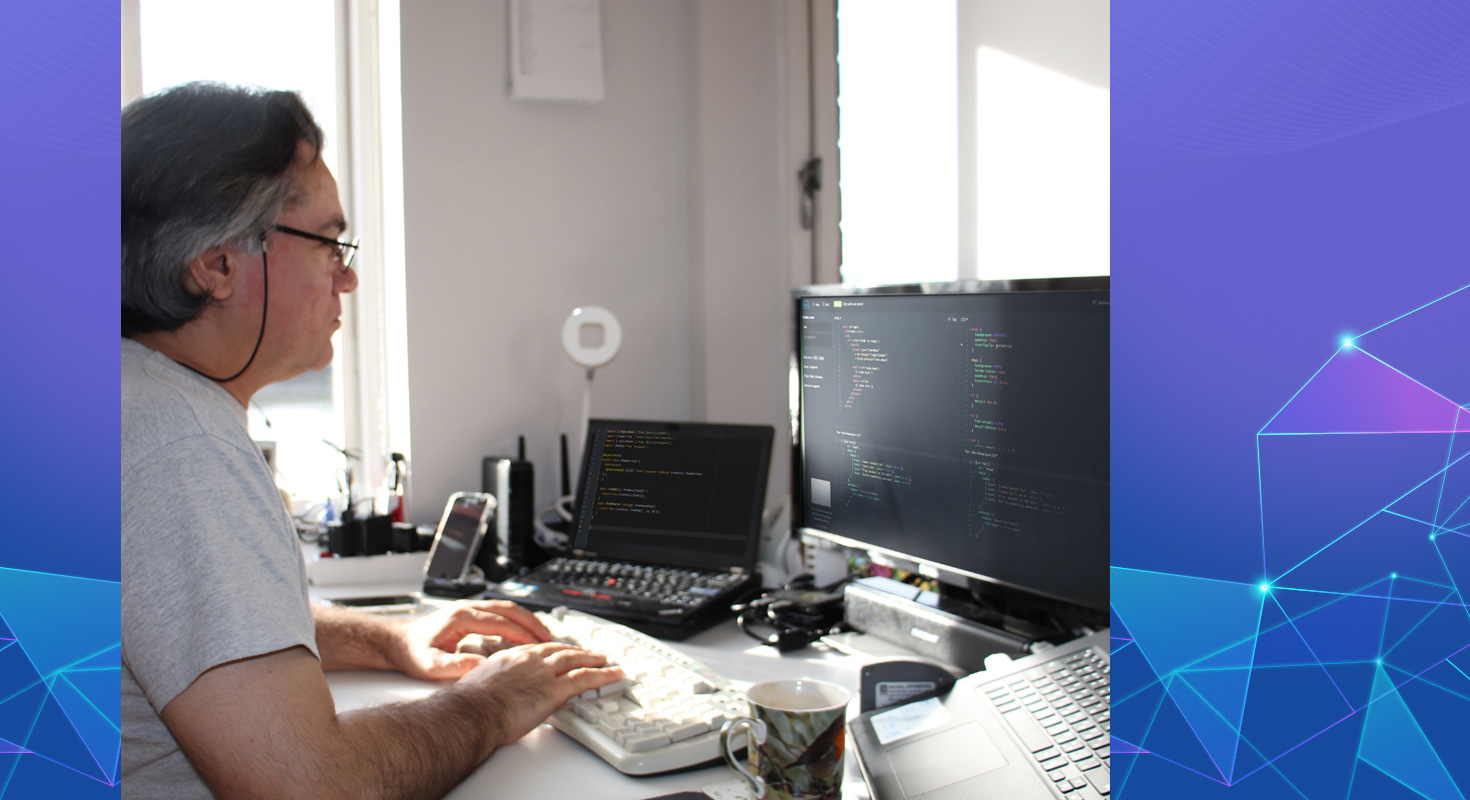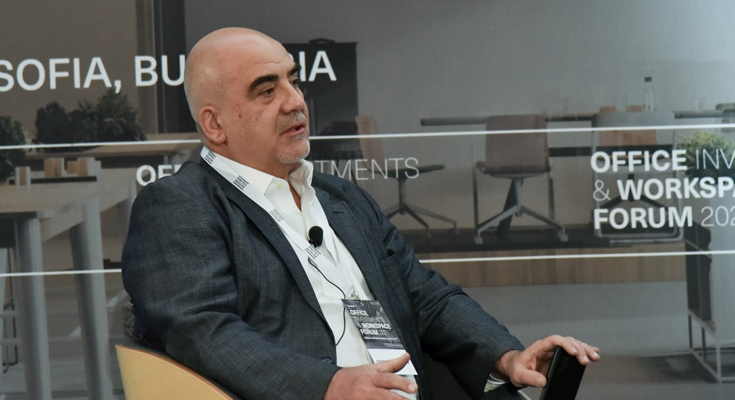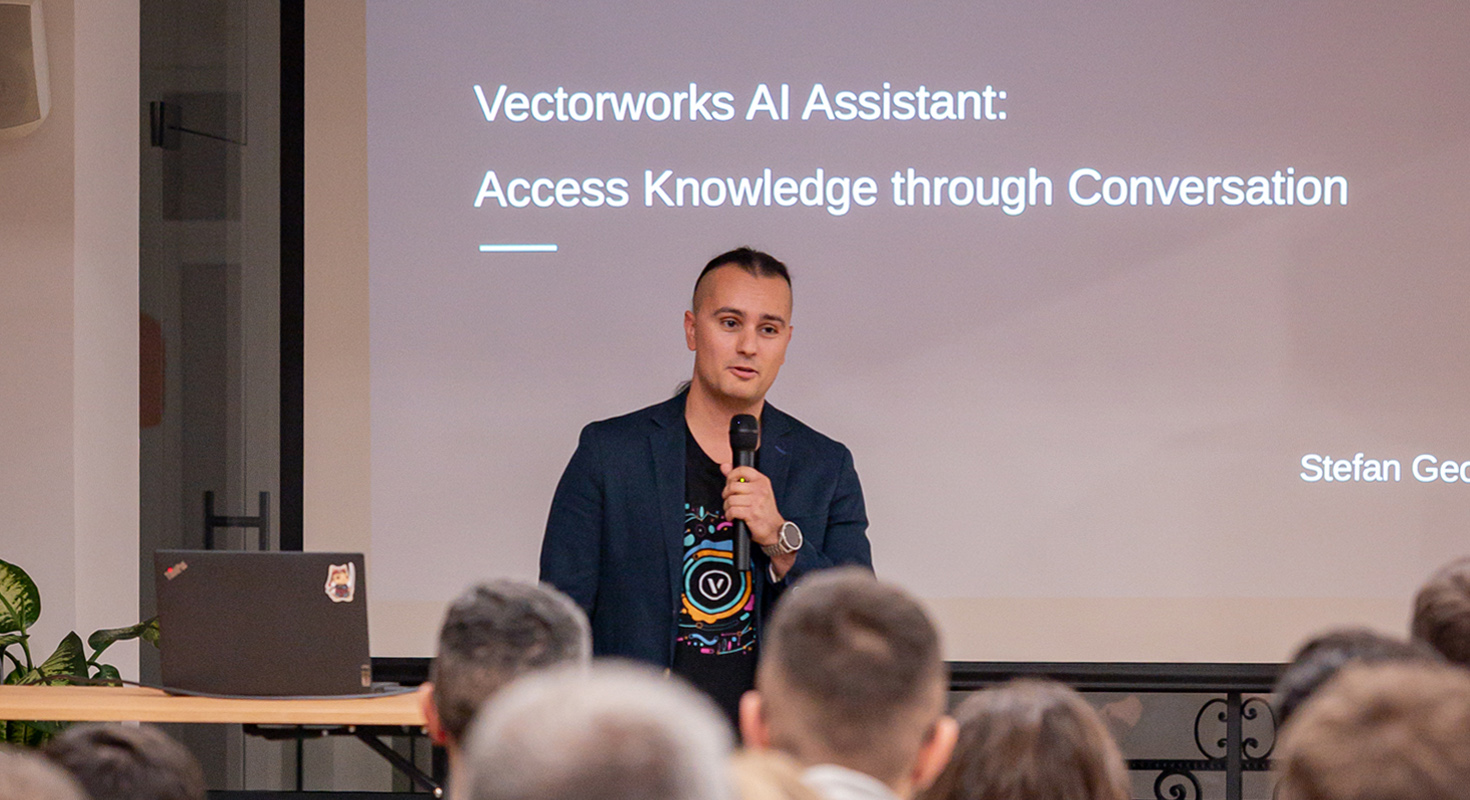
This intriguing article is based on a recent presentation by Stefan Georgiev – software developer at Nemetschek Bulgaria and member of the Vectorworks Cloud Services team, where he actively contributes to numerous projects – including the Vectorworks AI Assistant itself. His presentation was part of the AWS Sofia Cloud Day, hosted by Nemetschek Bulgaria on 14 October 2025 – a special event dedicated to knowledge sharing, innovation, and strengthening long-term strategic partnerships. Stefan presented an in-depth look at the development of the Vectorworks AI Assistant – an intelligent chatbot powered by Retrieval-Augmented Generation that enables users to access knowledge through natural conversation.
The Chatbot in Short
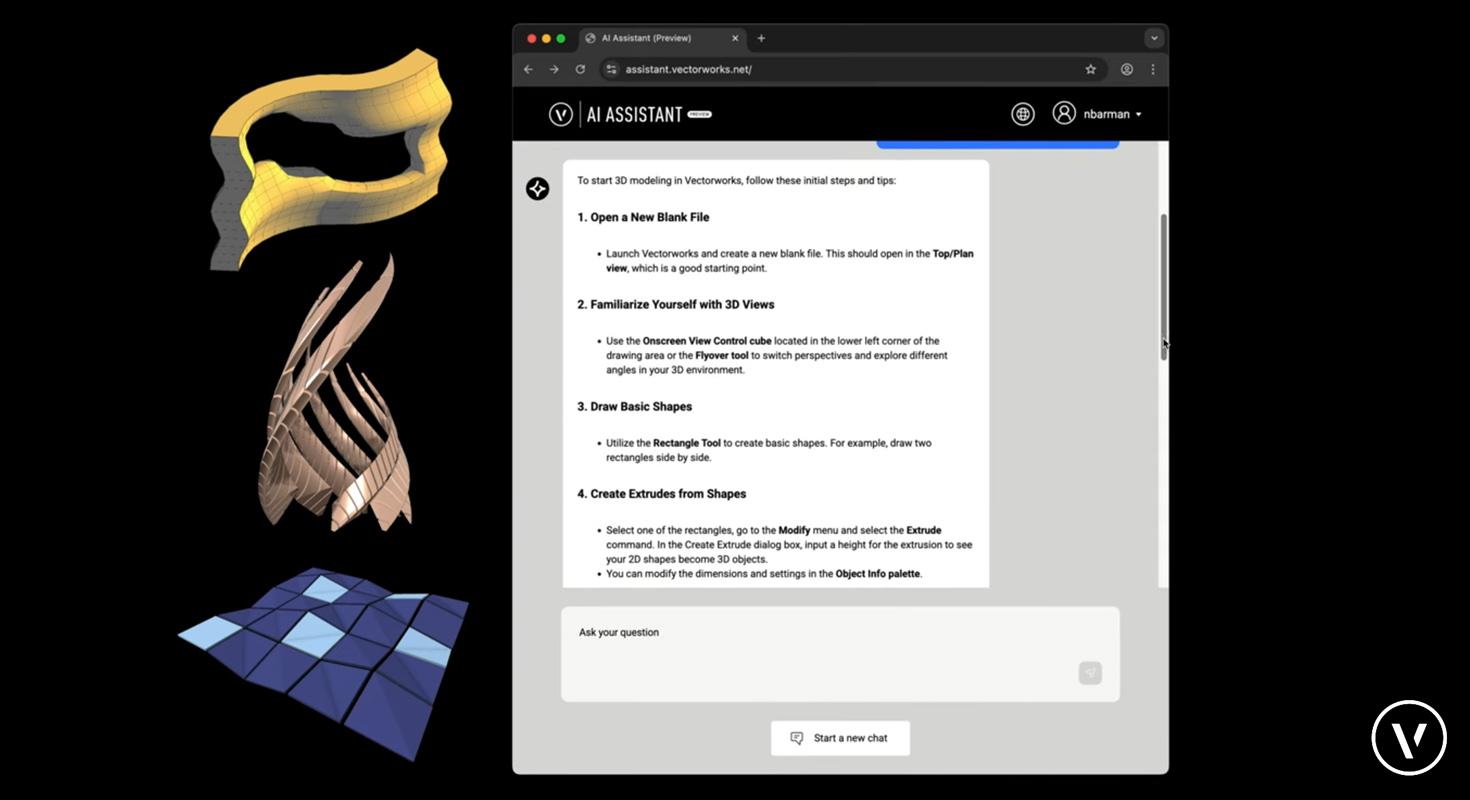
The Vectorworks AI Assistant is chatbot designed to help users navigate the platform more quickly, learn new tools efficiently, and get accurate, verified answers directly inside the software. Launched with Vectorworks 2025 Update 5, the AI Assistant represents a major step forward in integrating artificial intelligence into the daily workflows of architects, landscape professionals, and entertainment designers. More than a simple help feature, it is a context-aware companion able to answer questions, provide links to verified documentation, and clearly communicate how confident it is in each response. By grounding all answers in official Vectorworks materials – help pages, PDFs, tutorials, video transcripts – the AI Assistant eliminates guesswork and reduces the time users spend searching for information spread across numerous platforms.
A Look Behind the Scenes: How the AI Assistant Was Developed
While the AI experience feels most helpful and mostly effortless for the user, the technology behind the Assistant is far more complex than sending a question to an AI model and waiting for an answer. Traditional large language models (LLMs) come with limitations: their knowledge can be outdated, they behave like black boxes, and they may hallucinate – producing answers that sound correct but aren’t.
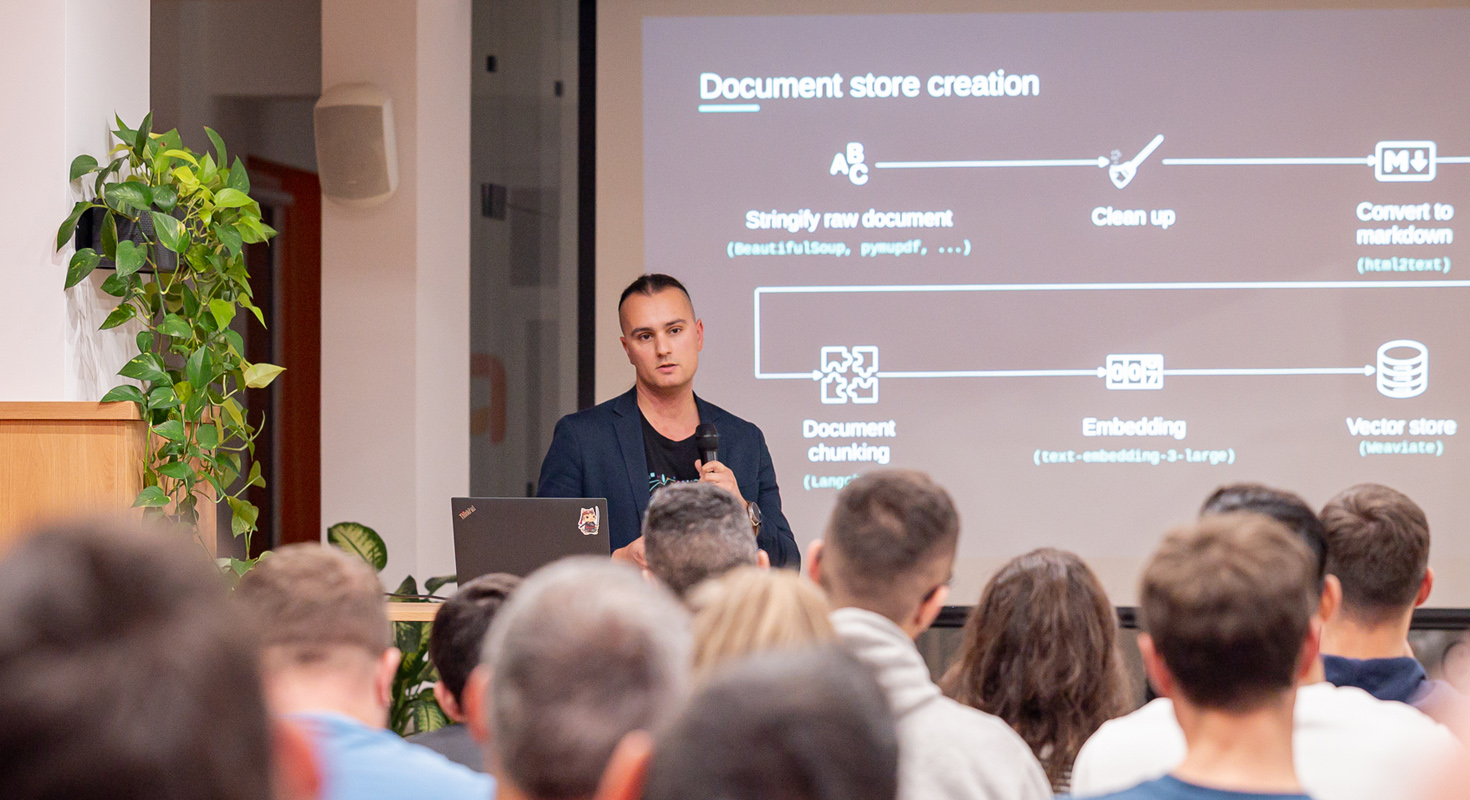
To avoid these pitfalls, Vectorworks engineers built the Assistant using Retrieval-Augmented Generation (RAG), ensuring that all answers are grounded in the latest official Vectorworks documentation. The process begins with building an extensive “document store” – a curated, cleaned, and structured version of all Vectorworks knowledge sources, converted into Markdown, split into manageable chunks, and transformed into vector embeddings stored in a semantic database.
When the user asks a question, the system first rewrites it as a standalone query, identifies its intent, determines the language, and extracts keywords. A hybrid semantic and keyword search retrieves the most relevant document chunks, which are then reranked by an AI model to ensure accuracy. Only the top matches make it into the final prompt sent to the AI model (currently OpenAI’s gpt-4o-mini which performs as good as newer models like gpt-5 but is actually much faster), which generates the answer. The result is streamed live to the user, then post-processed with metadata to show the sources and calculate a confidence score. The entire system runs on AWS using containerized microservices, ensuring scalability and reliability. All of this work – document processing, retrieval logic, prompt engineering, and metadata tracking – forms a sophisticated and transparent pipeline that guarantees every answer is accurate, up-to-date, and verifiable.
Key Features That Make the Vectorworks AI Assistant Unique
-
Accurate, source-based answers
Every response is generated using official Vectorworks documentation. No hallucinations, no outdated content, and clear links to the exact pages used. -
Confidence scoring and transparency
The Assistant displays how confident it is in the answer, giving users clarity and trust. -
Supports any modern language
The system detects the user’s language automatically and replies in the same language, facilitating global workflows. -
Context-aware question handling
Follow-up questions, vague requests, and natural conversation (“How do I do that?”) are transformed into precise standalone queries before processing. -
Hybrid semantic + keyword search
Combining two retrieval methods ensures both conceptual and literal matches, improving accuracy. -
Smart reranking
An AI model scores each retrieved text chunk from 0–100, selecting only the most relevant information for the final answer. -
Fast, live streaming responses
Answers appear in real time, allowing users to read while the Assistant continues generating. -
Deep links to relevant help articles
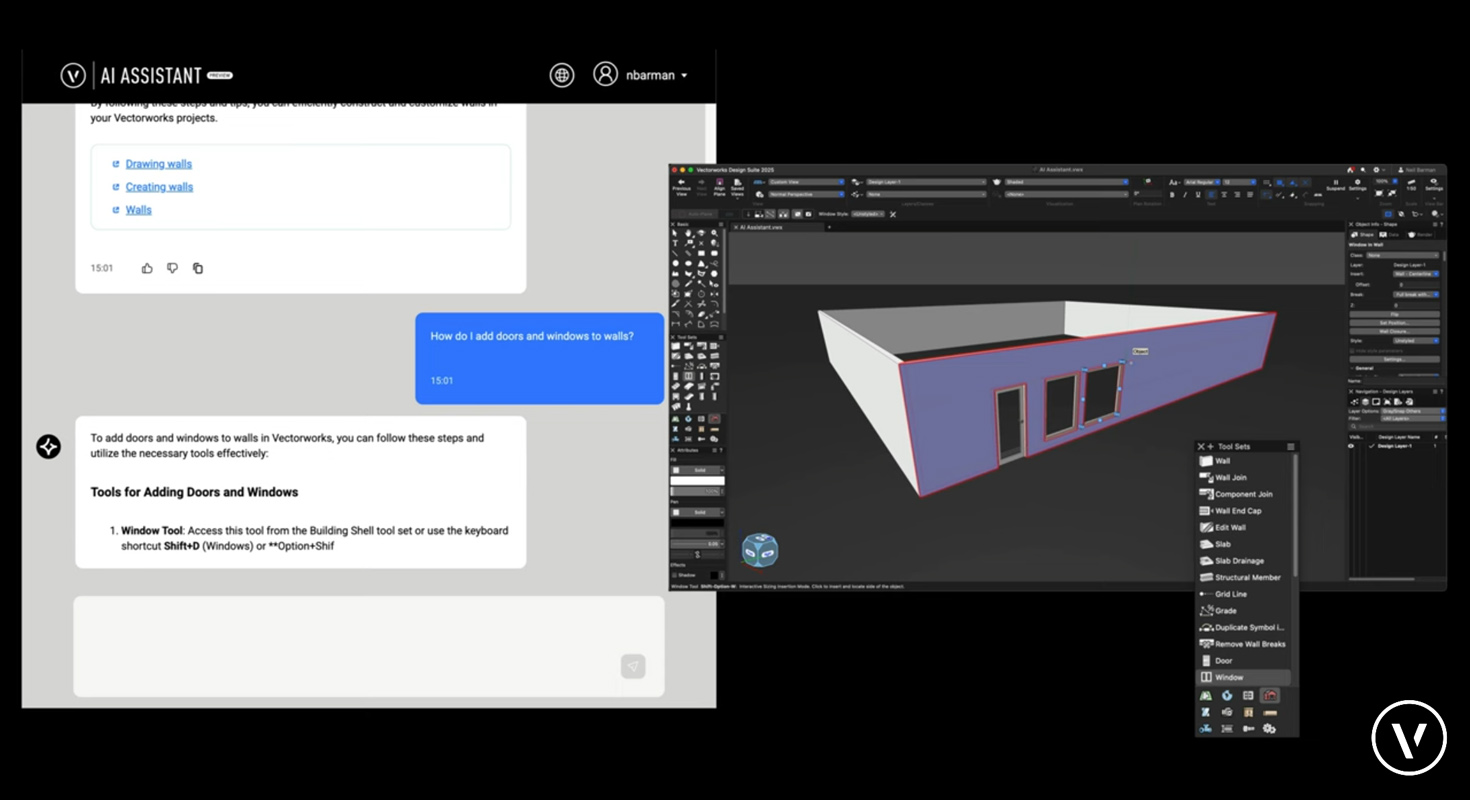
Users can immediately open additional materials for deeper exploration.
Why This Is Great News for Vectorworks Users
Vectorworks is a rich ecosystem overflowing with knowledge – help files, manuals, videos, tutorials. Finding the right information often requires jumping between multiple platforms and digging through thousands of pages. With the AI Assistant, users no longer need to spend minutes – or hours – searching for a single answer. New users benefit from a dramatically reduced learning curve, while experienced designers can stay focused on their creative work without interrupting their workflow.
For businesses, the Assistant can reduce onboarding time, lower support needs, and help teams adopt advanced Vectorworks workflows – BIM, parametric modeling, landscape tools, entertainment design features—more confidently and efficiently.
What’s Next: Vectorworks’ Evolving AI Strategy
The AI Assistant is only the beginning. Vectorworks has stated that this release establishes the foundation for deeper AI integration across the platform. Future updates may include more personalized guidance, expanded automation of routine tasks, context-aware design suggestions, more advanced retrieval capabilities, and further improvements to speed and accuracy. As AI continues to evolve across the AEC and entertainment industries, Vectorworks aims to lead responsibly with tools that are transparent, trustworthy, and built on reliable information – not speculative or experimental models.