At Nemetschek Bulgaria, our long-term partnership with Bluebeam has always been driven by a singular mission: engineering tools that save time, reduce friction, and let professionals focus on what they do best—designing and building the future.
With the launch of Bluebeam Max, a new premium subscription plan that supercharges Bluebeam Revu with advanced AI-powered capabilities and connected workflows, the entire ecosystem takes a massive leap forward. We are incredibly proud to share that a dedicated engineering team right here at Nemetschek Bulgaria played a central role in developing one of Bluebeam Max's standout capabilities: Connected Sessions.
To give you an inside look at how this feature came to life and why it is revolutionizing AEC (Architecture, Engineering, and Construction) workflows, we sat down with Nikolay Cholakov, Engineering Team Leader at Nemetschek Bulgaria, who spearheaded the development alongside his team.
The Core Challenge: The Cost of Tool-Switching
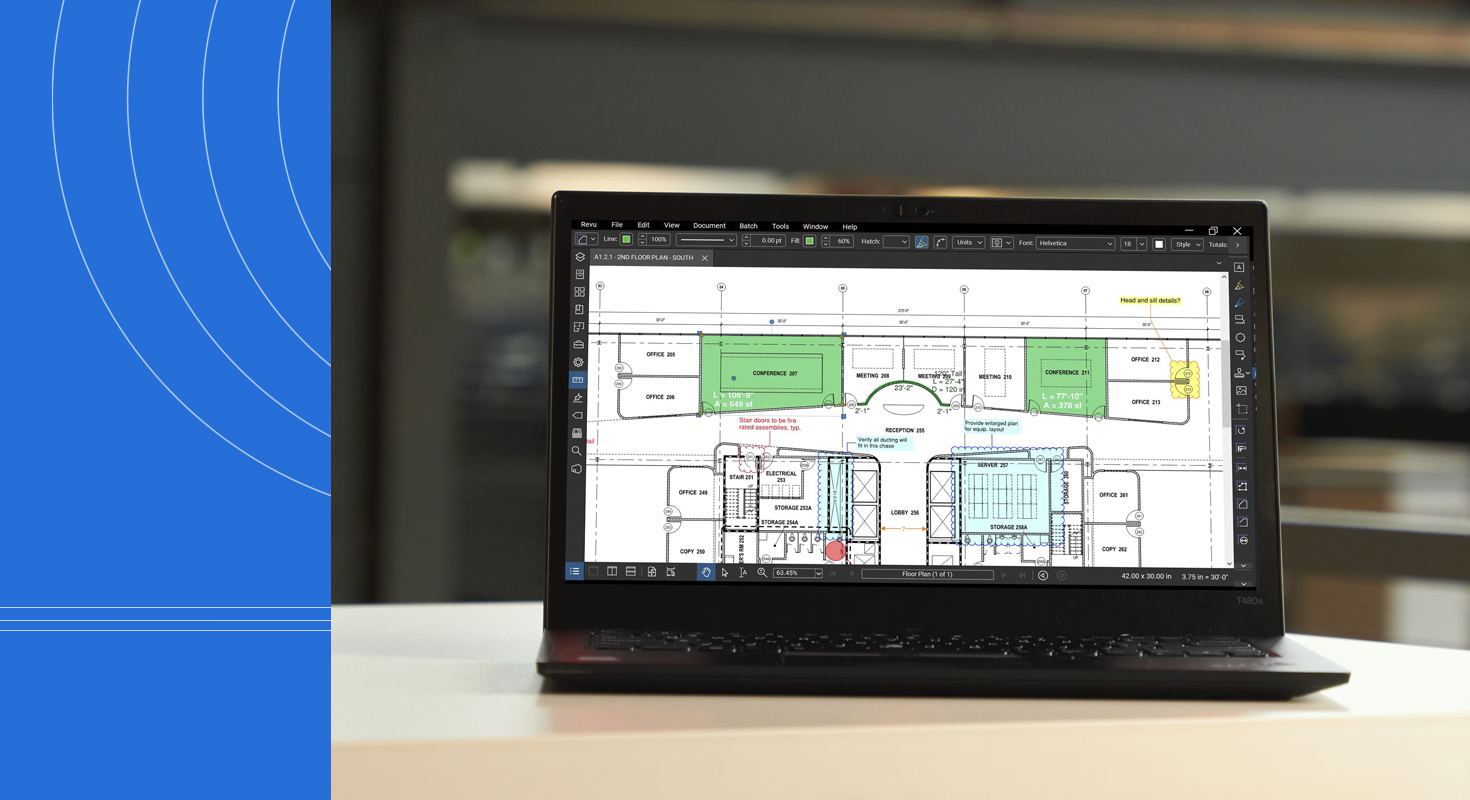
For years, Bluebeam Revu and Bluebeam Studio Sessions have been the industry standard for project documentation, enabling real-time cloud collaboration. However, for designers and engineers, the primary workspace remains inside Building Information Modeling (BIM) authoring tools like Autodesk Revit.
Traditionally, the communication loop between a reviewer marking up a PDF in a Bluebeam Studio Session and a designer modifying the model in Revit was segmented. Designers had to constantly switch back and forth between different software programs, manually translate 2D comments onto 3D components, and bridge the coordination gap.
As Nikolay points out, the main philosophy behind Bluebeam's global success is simple: saving time and effort for the user. To true design professionals, even minor tool-switching counts as lost momentum.
Introducing Connected Sessions: A True "Game-Changer"
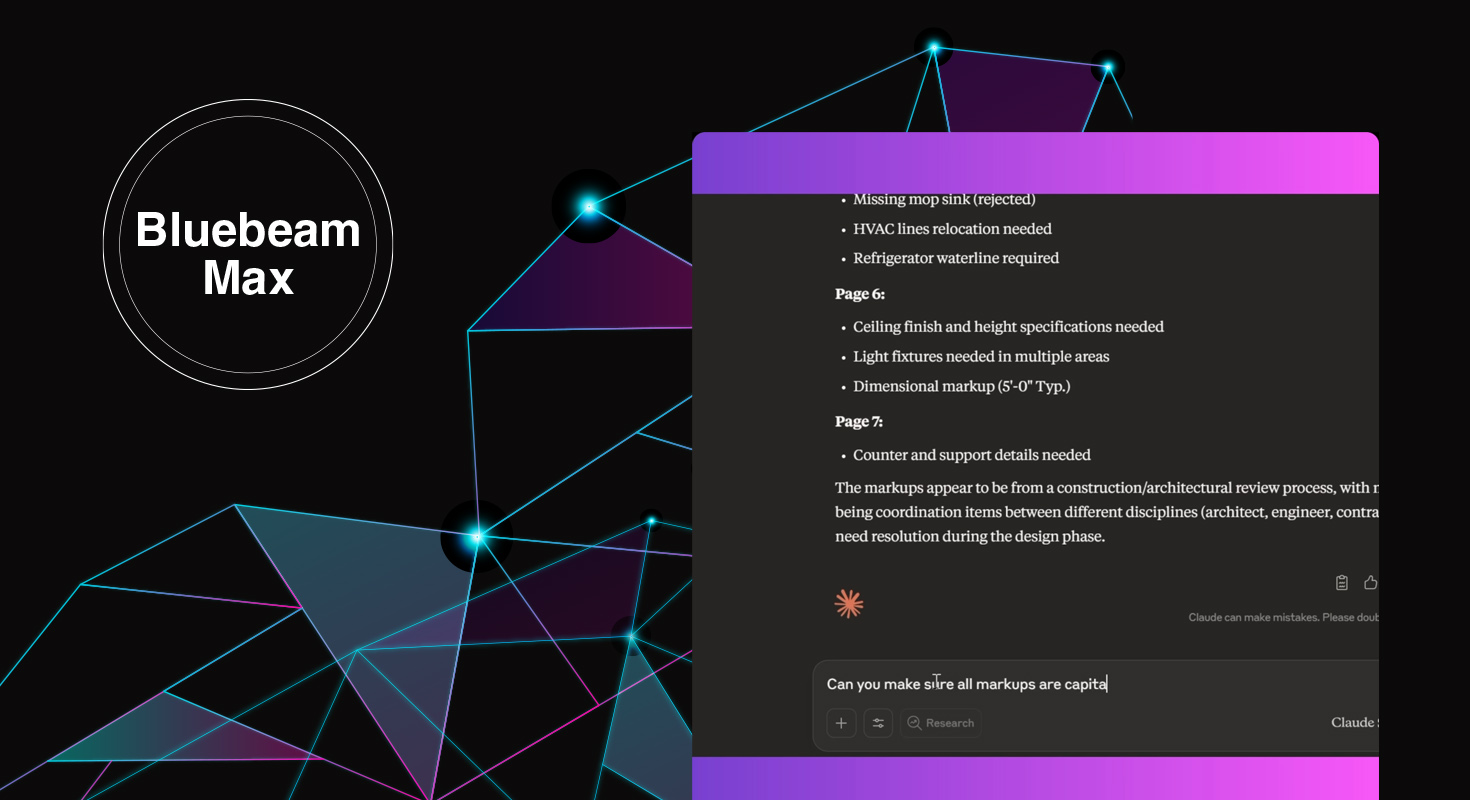
Born from direct feedback and deep conversations with real-world users, Connected Sessions is an advanced extension of the Bluebeam Revit plugin, exclusive to the Bluebeam Max plan.
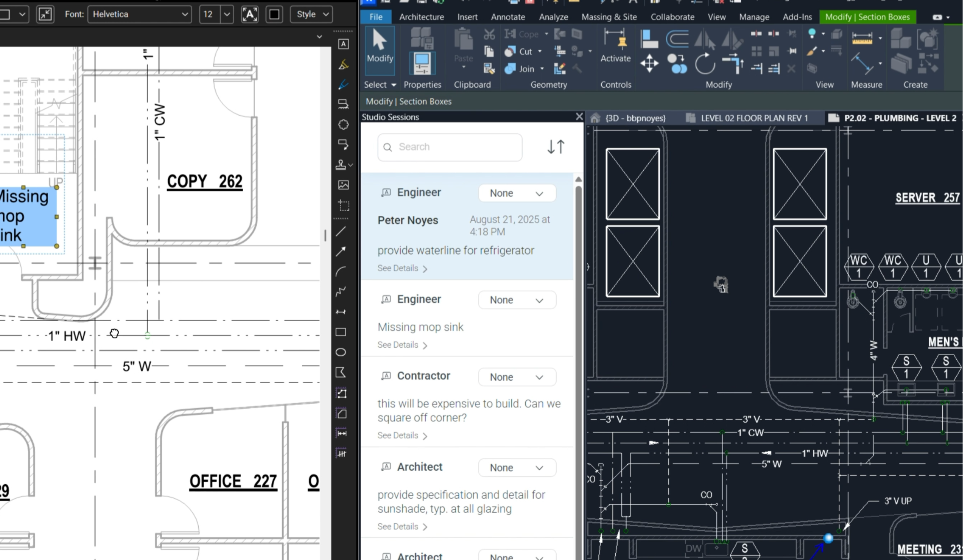
Instead of treating PDF documentation and BIM models as isolated entities, Connected Sessions bridges them seamlessly. It integrates Bluebeam Studio Sessions directly inside the Revit interface. This means that real-time markups, notes, and collaboration comments made on 2D project sheets are instantly accessible and engaged with directly over 2D sheets and 3D models—without ever leaving Revit.
Nikolay shared a telling story from the development phase:
"One of the software engineers on my team actually used to work as a professional structural designer, using Revit and Bluebeam Revu daily in his previous career. When I first explained the architectural concept of Connected Sessions to him, his candid reaction wasn't just 'Wow'—he immediately said, 'This is a game-changer.' He knew exactly how much friction it eliminates from a designer's daily routine."
Under the Hood: Resolving the 2D-to-3D Disconnect
The seamless magic of Connected Sessions relies heavily on precise engineering behind the Bluebeam plugin for Revit and viewports. To provide a smooth workflow, the feature directly hooks into Bluebeam's cloud document management system.
Nikolay expands on how this ties into the overall ecosystem data structure:
"Connected Sessions expands the capabilities of the Revit plugin in a very specific, unique direction. We give different roles in a construction project the ability to work together simultaneously on the exact same document. It relies on the cloud Document Management System, Studio, where users can spin up projects and set up documentation. From there, the project manager assigns rights to various users—some can only read documents, while others can read and edit. From a Revit perspective, our primary focus is enabling users to seamlessly place, track, and interact with these markups."
To ensure absolute data integrity and spatial accuracy, the workflow follows a strict path:
-
Viewport Binding: The PDF sheet must be generated using the specialized Bluebeam plugin for Revit.
-
Intact Viewports: This process embeds vital metadata, ensuring that viewport data remains entirely intact within the PDF.
-
Seamless Sync: Because the markups are strictly bound to the model coordinates through these viewports, any markup placed inside a viewport in a Bluebeam Session maps perfectly back into the Revit environment, visible in both 2D sheet views and 3D views.
Driving the Future of BIM Ecosystems
By bringing Bluebeam’s unmatched collaborative power directly into the designer’s primary authoring tool, the Nemetschek Bulgaria team has helped eliminate a massive bottleneck in the modern construction workflow. Connected Sessions ensures that everyone—from project managers overseeing documentation permissions in Studio to engineers tweaking models in Revit—is looking at the exact same truth, in real-time.
We are proud of Nikolay and the entire engineering team for their dedication to pushing the boundaries of what Bluebeam Max can do, proving once again that Bulgarian talent is at the very core of global construction technology innovation.
Curious to see Connected Sessions in action? Explore the full capabilities of the newly launched Bluebeam Max here.